

Close your eyes. Imagine sliding your fingers across a matte black box. Then, suddenly—a raised edge. A shimmer of gold catches the light. That split-second tactile encounter? It just told your customer they’re holding something worth keeping.
That’s foil stamping. Not a decoration. A declaration.
In the crowded battlefield of retail shelves and unboxing videos, foil stamping transforms ordinary packaging into a sensory experience that commands attention—and justifies premium pricing. Whether you’re launching a luxury skincare line or repositioning a heritage spirit brand, understanding this finishing technique isn’t optional anymore. It’s strategic.
Let me walk you through everything I’ve learned working with hundreds of brands at BrillPack—the technical realities, the hidden costs, and the design choices that separate “pretty” from “unforgettable.”
[INSERT IMAGE IDEA: Hero shot – Close-up of fingertips touching gold foil stamped logo on deep navy rigid box, dramatic side lighting to emphasize texture and metallic reflection]
What is Foil Stamping?
Foil stamping is a specialized printing process that applies thin metallic or pigmented foil to packaging surfaces using heat, pressure, and a custom metal die. The result is a brilliant, reflective finish that sits atop the substrate—creating visual depth and tactile contrast impossible to achieve with conventional printing methods.
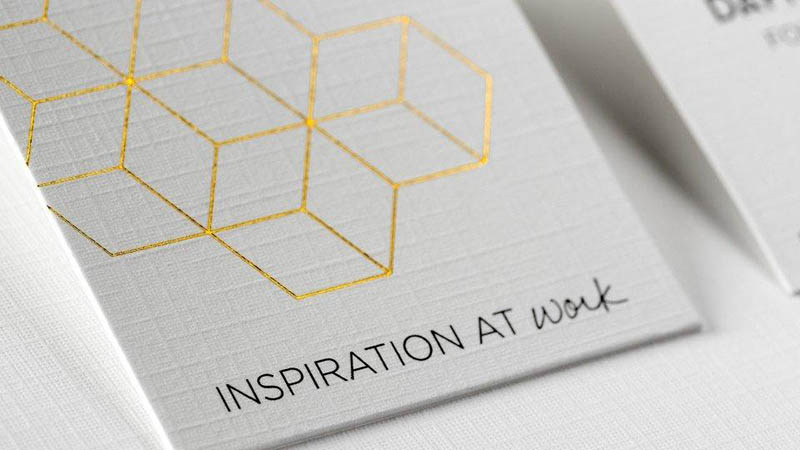
Think of it as jewelry for your packaging. Where offset printing deposits ink into paper fibers, foil stamping layers a metallic film on top, catching light at angles that make your brand literally shine.
Why Foil Stamping Elevates Brand Perception (And Your Price Point)
Here’s something product managers tell me repeatedly: Consumers will pay 30-40% more for products in foil-stamped packaging versus identical items in plain boxes.
Why? Psychology.
The Shelf Appeal Advantage
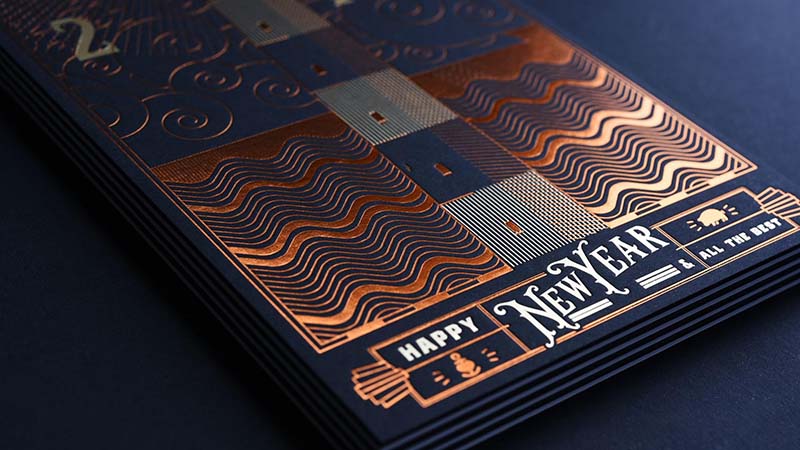
Walk down any prestige beauty aisle. Tom Ford. La Mer. Dior. Notice the pattern? Metallic accents aren’t accidental—they’re engineered scarcity signals. Our brains associate reflective, precious-metal finishes with luxury goods because, historically, only expensive items warranted gold leaf or silver detailing.
You’re not just decorating. You’re triggering centuries of evolutionary conditioning.
Perceived Value vs. Actual Cost
Here’s the beautiful economics: While foil stamping increases your packaging cost minimally when ordered at scale, it can justify a $10-$25 retail price increase per unit. That’s not markup. That’s value engineering.
I recently worked with a craft chocolate brand repositioning from $12 to $28 per bar. Same recipe. The only change? We replaced their kraft paper sleeve with a rigid box featuring copper foil stamping and embossing. Sales increased 340% in the first quarter.
The box did that.
The Foil Stamping Process: What Actually Happens
Let’s demystify the manufacturing reality, because understanding the process helps you design smarter and budget realistically.
Heat + Pressure + Precision
Foil stamping uses a heated metal die (typically magnesium or brass) that presses against your packaging substrate with several tons of pressure. Sandwiched between the die and your box is a thin polyester film coated with metallic pigment and a heat-activated adhesive layer.
When the die heats to approximately 200-300°F (depending on substrate), the adhesive activates. The die presses. The foil transfers. The carrier film peels away. What remains is a permanently bonded metallic layer that won’t flake, crack, or fade like metallic inks.
The entire impression takes 1-3 seconds per piece. It’s hot stamping, quite literally.
The Vector File Requirement
This is critical: Foil stamping requires vector artwork(see our guide on preparing print-ready files). AI, EPS, or high-resolution PDF with outlined fonts. Why? Because your design becomes a physical metal die. Every curve, every letter gets chemically etched into steel or magnesium.
Raster images (JPEGs, PNGs) won’t work. The die maker needs mathematically precise paths, not pixels.
💡 Insider Tip: Avoid text smaller than 8-point font.
Below that threshold, foil tends to “bridge”—filling in the negative space between letters, especially on textured papers. Your elegant script becomes an illegible metallic blob. I’ve seen production runs ruined by 6pt taglines that looked perfect on screen.
[INSERT IMAGE IDEA: Close-up technical photo showing vector artwork file on computer screen next to the actual magnesium die plate, with engraved design visible, plus a finished stamped sample]
The Cost Reality: Why Transparency Matters
Let’s talk money. Because the moment you mention “custom metal die,” decision-makers tense up.
Understanding Mold Fees (Setup Costs)
Yes, you’ll pay a one-time die/mold cost ranging from $20-$200 depending on design complexity and size. That’s non-negotiable. You’re commissioning a precision manufacturing tool that will stamp thousands of impressions.
But here’s what changes the math: Once that die is created, it’s yours forever. Reorders? No additional mold fee. That $150 die divided across 5,000 units is $0.03 per box. Across 50,000 units over three years? $0.003 per box.
The setup cost evaporates at scale.
💡 Expert Insight: Not All Dies Are Created Equal
Your mold fee depends heavily on the metal we choose for your specific design. At BrillPack, we select the material based on your run size and detail level:
- Magnesium (The Budget Friendly): Best for short runs and simple shapes. Lower cost ($), but less durable for fine details.
- Copper (The Industry Standard): The sweet spot for B2B brands. Excellent durability for large runs (10k+) and sharp heat transfer.
- Brass (The “Rolex” Option): CNC-machined for extreme precision. Essential for multi-level embossing or ultra-intricate patterns. Highest cost ($$$), but unmatched definition.
Unit Costs & Volume Dynamics
This is where manufacturing efficiency reveals itself. For bulk orders (3,000+ units), foil stamping unit costs typically range $0.05-$0.30 per piece depending on coverage area and complexity.
Yes, you read that correctly. When you’re producing at volume, the incremental cost of adding metallic luxury becomes almost negligible.
Here’s the breakdown:
| Order Quantity | Die Cost | Unit Cost | Total Per Piece |
|---|---|---|---|
| 1,000 units | $150 | $0.25 | $0.40 |
| 3,000 units | $150 | $0.15 | $0.20 |
| 5,000 units | $150 | $0.12 | $0.15 |
| 10,000 units | $150 | $0.08 | $0.10 |
Notice the pattern? The die cost dilutes with every additional unit, while production efficiency drives down the per-piece stamping cost. At 10,000 units, you’re adding premium metallic finishing for ten cents per box.
That’s the power of manufacturing at scale. The same principle that makes your packaging affordable makes foil stamping accessible.
Design Possibilities: Beyond Basic Gold
When I started in packaging, 90% of foil requests were gold or silver. Now? The options are intoxicating.
Foil Color & Finish Options
- Metallic Foils: Gold, silver, copper, rose gold, gunmetal, holographic
- Pigment Foils: Matte black, white, or soft pearlescent finishes (for a sophisticated, non-metallic glow).
- Special Effects: Prismatic, patterned, brushed metal textures
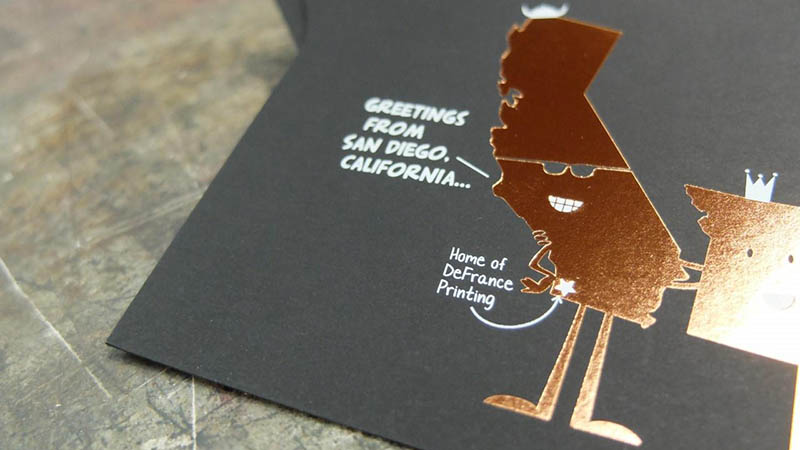
✨ Pro Tip: Rose gold on blush pink paper? Subtle and sophisticated. Holographic foil on black? Maximum contrast, massive impact. The substrate color is half the equation—always request physical swatches to see the interaction.
👉 Ask our team for a physical Rose Gold swatch—photos don’t do it justice.
Substrate Suitability
Foil stamping works beautifully on:
- Coated paperboard (ideal for crisp impressions)
- Textured/specialty papers (adds tactile depth)
- Rigid box surfaces
- Folding carton board
It struggles on:
- Highly porous uncoated paper (uneven adhesion)
- Plastic films (requires different foil types)
- Extremely rough textures (incomplete transfer)
[INSERT IMAGE IDEA: Swatch grid showing 9 different foil colors (gold, silver, rose gold, copper, holographic, matte black, etc.) stamped on both white and black cardstock for color comparison]
Foil Stamping vs. Other Finishing Techniques
Not sure if foil stamping is the right choice? Here’s how it compares to alternatives:
| Feature | Foil Stamping | Metallic Ink | Embossing (Blind) |
|---|---|---|---|
| Visual Impact | High-gloss metallic shine; reflective at all angles | Subtle metallic effect; less reflective, more matte | No shine; dimensional texture only |
| Setup Cost | $50-$200 die cost | Minimal (standard printing plate) | $50-$300 die cost |
| Unit Cost (Bulk) | $0.05-$0.30 per piece | $0.10-$0.40 per piece | $0.05-$0.50 per piece |
| Tactile Feel | Smooth raised surface (especially with emboss combo) | Flat, no texture | Raised/recessed texture; very tactile |
| Durability | Excellent; resists fading, scratching | Moderate; can wear or crack over time | Excellent; permanent substrate deformation |
| Best Use Case | Premium branding, luxury retail, gift packaging | Cost-effective metallic accents, large coverage areas | Subtle sophistication, minimalist elegance |
Can You Combine Them?
Absolutely. Registered foil stamping + embossing (often called “foil debossing”) creates a dimensional metallic effect that’s pure sensory overload. The foil sits in a recessed impression, protected from wear while creating shadow depth.
This combo costs more—you’re running two processes—but for ultra-premium products (haute perfume, spirits, jewelry), nothing compares.

File Preparation: How to Set Up Artwork for Success
Your designer hands over files. You approve. Two weeks later, the manufacturer calls with problems. Let’s prevent that.
Technical Requirements Checklist
✅ Vector format: AI, EPS, or PDF with outlined fonts
✅ Color callouts: Specify exact foil color (not RGB/CMYK values—foil doesn’t print that way)
✅ Separate layer: Foil areas on a dedicated layer labeled “FOIL” or as spot color
✅ Stroke width minimum: 0.5pt for fine lines; 1pt+ recommended
✅ Knockout or overprint: Clarify if foil knocks out underlying print or overprints
Common Design Pitfalls
Thin lines disappear. That elegant 0.25pt border? It won’t transfer cleanly. Foil needs mass.
Tiny text fills in. Script fonts under 10pt become illegible metallic blobs on textured paper.
Intricate patterns fail. That detailed damask pattern with 0.5mm gaps? The foil will bridge across negative space.
When in doubt, print a black-and-white proof at actual size. If details look too delicate in black ink, they’ll fail in foil.
Sustainability: Is Foil Stamping Eco-Friendly?
I get this question weekly from conscious brands. The answer isn’t binary.
The Honest Assessment
Traditional metallic foils are polyester-based films coated with aluminum or metallic pigments. They complicate recycling because most facilities can’t easily separate the thin foil layer from paper fibers.
However:
Modern advancements offer solutions:
- Water-based adhesive foils that don’t interfere with pulping processes
- Reduced-metal foils using lighter coatings
- Clear polymer foils (non-metallic) that are recyclable in some streams
The truth? Small foil coverage (logos, accent lines) on recyclable paperboard typically doesn’t disqualify the entire package from recycling streams. Large-area foil coverage (50%+ surface) might.
Making Sustainable Choices
If sustainability is a brand pillar:
- Minimize foil coverage to essential branding only
- Choose FSC-certified substrates for base packaging
- Request pigment foils instead of metallic (easier to recycle)
- Communicate clearly: Print recycling instructions directly on packaging
Transparency builds trust. If your box isn’t fully recyclable, say so—and explain what consumers can do with it.
[INSERT IMAGE IDEA: Side-by-side comparison of excessive foil coverage (70% surface) vs. strategic minimal foil accent (brand logo only), with recycling symbols and eco-messaging visible]
Lead Time & Production Planning
Foil stamping is remarkably efficient when integrated into the manufacturing workflow.
Typical Timeline:
- Die creation: 3-5 business days
- Foil stamping integration: Adds only 2-3 days to standard production
- Total lead time: 15-20 business days from artwork approval
The key is planning. Submit final artwork early, and the die creation happens parallel to other pre-production processes. For growing brands launching seasonal collections or limited releases, this timeline integrates seamlessly into smart inventory planning.
Rush services exist for urgent campaigns, though expedited scheduling may affect pricing.
When Foil Stamping Makes Strategic Sense
Not every product needs foil. Here’s when it’s worth the investment:
✅ Premium positioning (products $40+ retail)
✅ Gift packaging (occasions demand visual luxury)
✅ Brand differentiation (crowded categories need standout)
✅ Reusable packaging (customers keep beautiful boxes)
✅ Limited editions (foil signals exclusivity)
If you’re competing purely on price in mass-market retail, foil stamping might overcomplicate production. But if you’re building brand equity and customer lifetime value? It’s an investment, not an expense.
Conclusion: The ROI of Reflective Excellence
Foil stamping isn’t just a pretty finish. It’s a strategic lever that influences consumer perception, purchase behavior, and willingness to pay.
The metallic shimmer that catches light on a shelf. The satisfying tactile contrast when a customer picks up your box. That split-second sensory moment creates brand recall that transcends marketing budgets.
Yes, it requires upfront die investment. Yes, volume matters. But when you calculate the revenue lift from premium positioning against the incremental cost per unit—especially at scale—the math is compelling.
At BrillPack, we’ve seen brands transform their market presence with nothing more than strategic foil application. A repositioned product. A justified price increase. A customer who posts your packaging on Instagram because it feels special.
That’s not just packaging. That’s brand equity you can hold in your hand.
Ready to See the Difference Foil Stamping Makes?
Request a Free Foil Swatch Kit featuring 10+ metallic finishes on premium substrates, or explore our Luxury Packaging Gallery to see foil stamping applications across industries.
Contact BrillPack: Let’s discuss your project, timeline, and design vision. Because great packaging shouldn’t feel like guesswork—it should feel like gold.
 English
  Spanish
  Arabic
  German
  Italian
  French